
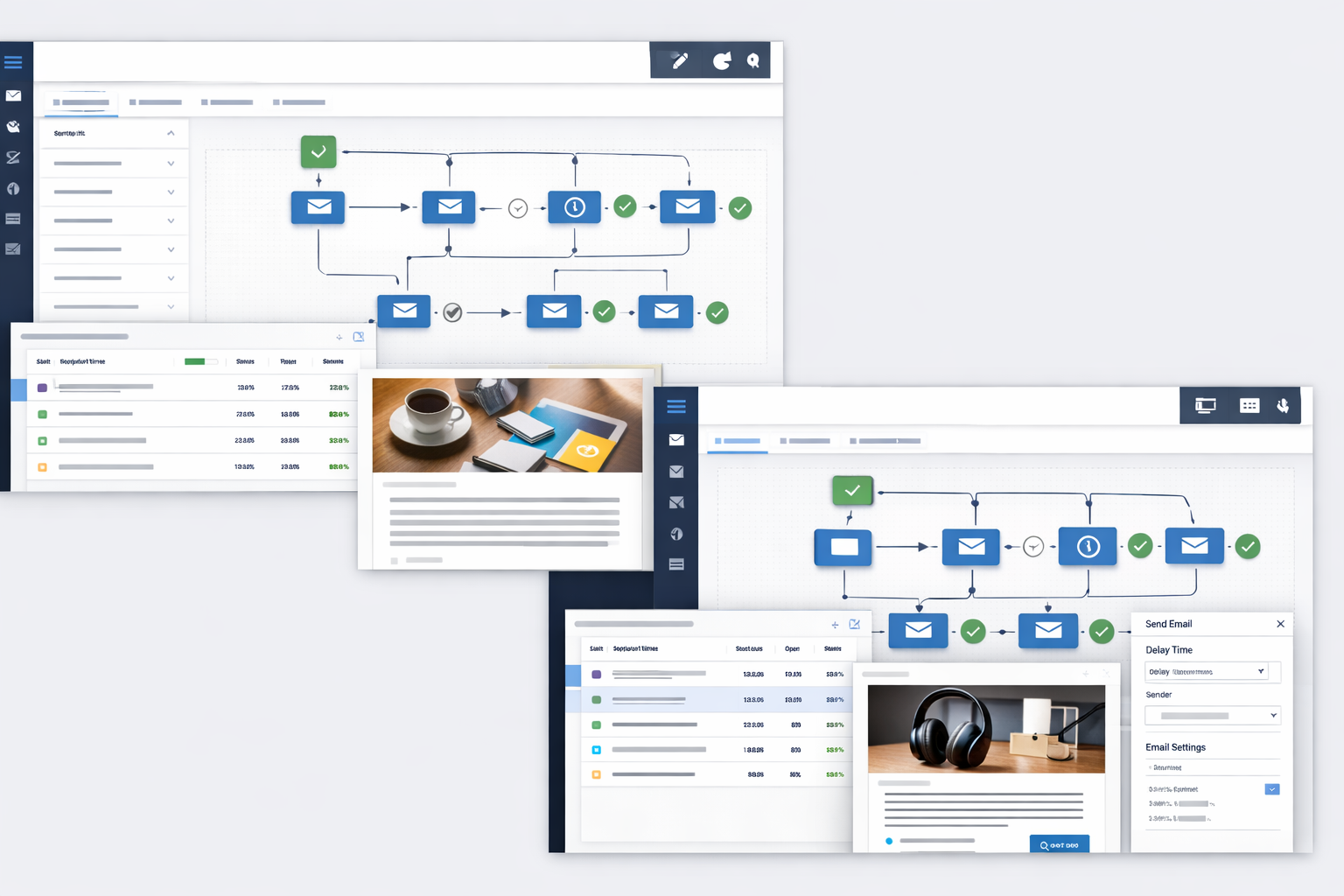
Automated email sequences work best when they are tied to buyer intent, not just to a calendar. Someone subscribes, requests a quote, views a pricing page, leaves checkout, signs up for a trial, makes a first purchase, or goes inactive. Each of those actions signals a different stage of readiness, and each deserves a different message.
For SMB owners, marketers, and team leads, this is one of the most practical ways to increase sales without adding constant manual follow-up. Instead of sending the same newsletter to everyone, you build a system that responds to behavior. That usually means better relevance, better conversion, and a clearer path from email engagement to revenue.
Quick answer: which sequences to launch first
- Start here: welcome series, lead or quote request follow-up, abandoned cart or abandoned checkout.
- Next layer: post-purchase, onboarding after signup or trial, win-back.
- Then expand: browse abandonment, cross-sell, reorder reminders, and reactivation by segment.
If your team has limited time, do not try to automate everything at once. A small number of strong sequences will usually outperform a large automation map built too early. Start with the scenarios closest to revenue, make them clean and measurable, then scale.
Why automated sequences outperform batch campaigns
A batch campaign is one message sent to many people. An automated sequence is a set of messages triggered by what someone actually does. That difference matters because timing and context matter. A person who just requested a demo is not in the same mindset as someone who bought last month or someone who has not opened an email in 90 days.
The strongest sales sequences reduce friction. They confirm the next step, answer objections, reinforce trust, and make the desired action easy. In practice, that could mean completing checkout, booking a call, activating a trial, buying again, or replying to a quote email.
There is also a deliverability angle. Inbox providers increasingly reward relevance and good list hygiene. That makes broad, low-context email blasts less attractive over time. Behavior-based sequences are not just better for conversion; they are usually better for inbox placement and long-term list health, too.
7 scenarios that drive sales
1. Welcome series for new subscribers
This is the first automation almost every SMB should build. A new subscriber has just given you permission to continue the conversation, which means attention is still fresh. If you do nothing, that intent fades quickly. If you respond well, you can move that person toward a first meaningful action.
A practical welcome flow is simple. Email one arrives immediately: thank them, deliver the promised resource, and explain what your brand does in plain language. Email two comes a day or two later: social proof, popular offers, common use cases, or a short buyer guide. Email three moves toward conversion: browse products, book a consultation, start a trial, or request a proposal.
For SMB teams, a welcome series often replaces hours of repetitive manual explanation. Done well, it qualifies the audience, educates the right people, and creates momentum from day one.
2. Follow-up after a form fill, quote request, quiz, or consultation inquiry
This is one of the highest-value automations for service businesses, B2B companies, agencies, schools, consultants, local businesses, and any SMB where the sale starts with a lead rather than an instant purchase. Someone has already raised a hand. Your job is to keep that intent warm.
The first email should arrive right away and remove uncertainty: “We received your request. Here is what happens next.” The second should build confidence: a short case study, a testimonial, a clear explanation of your process, or a before-and-after example. The third should focus on one strong action: choose a call slot, reply to confirm interest, pay a deposit, or review the proposal.
If your sales cycle is longer, add objection-handling emails. Answer the practical questions people ask before buying: timeline, expected inputs, who the solution is best for, and what makes your offer different from the alternatives. That alone can improve lead quality and reduce drop-off.
3. Abandoned cart or abandoned checkout
If you sell online, this belongs in your core automation stack. A shopper has already shown high intent by selecting products or entering checkout. In many cases, they did not leave because the offer was wrong. They left because they were interrupted, uncertain, distracted, or not fully ready to finish.
Your first reminder should arrive quickly and make return easy. Show the exact items, provide a clear button back to checkout, and keep the copy focused. A second email can handle trust and friction: shipping, returns, payment methods, guarantees, or reviews. A third can add a final reason to act, but it should not train customers to wait for a discount every time.
Many SMB brands overuse discounts here. Often, better results come from reassurance rather than price cuts: delivery clarity, product fit, availability, setup support, or a short consultation to help someone choose the right option.
4. Browse abandonment after product or page views
This scenario triggers earlier than cart abandonment and is especially useful when people compare options before they buy. Think furniture, electronics, fashion, equipment, SaaS plans, or any offer where buyers need more context before they commit.
The mistake here is pushing too hard, too early. Browse abandonment works best when it helps the buyer think. Send product education, comparison guidance, FAQs, category recommendations, compatible add-ons, or use cases. The goal is not always “buy now.” Often it is “move one step closer.”
For service businesses, the equivalent trigger might be a visit to a pricing page, service page, case study page, or calculator. In that case, the email may guide the reader to a consult, audit, checklist, or relevant success story instead of a direct purchase.
5. Onboarding after signup, trial start, or first key action
This sequence is essential for SaaS, education platforms, products with a user portal, tools with a free trial, and any business where the real sale depends on adoption. In these cases, revenue often depends less on the first email and more on whether the user reaches a clear value moment fast enough.
Good onboarding should lead people through the next most important steps, one action at a time. Complete the profile, connect the integration, import the first dataset, create the first campaign, invite the team, add billing, or publish the first item. Each email should reduce hesitation around a single next step.
The best onboarding sequences are event-driven, not just date-driven. If the user has already completed the step, skip that email. If they are stuck, send a help message, a quick video, a checklist, or an invitation to talk with support or sales.
6. Post-purchase sequence after the first order
Many businesses stop communicating right after the sale, which leaves money on the table. The first purchase is often the start of the most profitable part of the relationship: repeat purchase, cross-sell, upsell, review collection, and long-term retention.
The sequence usually begins with order confirmation and expectation-setting. Then it should help the customer succeed: setup instructions, best practices, usage guidance, or support content. After that, you can introduce relevant add-ons, refill logic, related services, or a request for a review once the product has had time to deliver value.
For service SMBs, post-purchase may look like post-project follow-up: feedback request, ongoing support offer, maintenance plan, additional scope, or the next project phase. These emails often improve retention and raise lifetime value at a lower cost than new customer acquisition.
7. Win-back for inactive customers and subscribers
An inactive segment is not just a list of old contacts. It is a group of people you have already spent time or money to acquire. A win-back sequence helps you bring back customers who used to engage but stopped opening, clicking, buying, or logging in.
Start with relevance, not desperation. Remind them what has changed, what value they may be missing, or why now is a good time to return. Then add a curated offer, a product collection, a new use case, a service update, or a targeted incentive if that makes sense for your margin. The final email can ask a clean question: stay subscribed or opt out. That protects list quality and keeps your database healthier.
Win-back works especially well when it is segmented. A past high-value buyer should not receive the same message as a subscriber who never purchased. The more specific the reason to return, the better the outcome.
Table: trigger, goal, CTA, timing
| Scenario | Trigger | Main goal | Primary CTA | Suggested timing |
|---|---|---|---|---|
| Welcome series | New subscription | Move to first meaningful action | Browse offer / book consult | Immediately, then 1–2 days, then 3–5 days |
| Lead follow-up | Form fill, quote, inquiry | Keep lead warm | Book call / reply / confirm interest | Immediately, then 1 day, then 3 days |
| Abandoned cart | Cart or checkout not completed | Recover purchase intent | Complete checkout | Quickly, then next day, then as needed |
| Browse abandonment | Viewed product or key page | Nurture active interest | Return to page / request help | Same day or next day |
| Onboarding | Signup, trial, first action | Reach first value moment | Complete next setup step | Event-based across first days |
| Post-purchase | First order | Increase retention and LTV | Use product / buy complement | Immediately, then days or weeks later |
| Win-back | Inactivity window reached | Reactivate or clean segment | Return / buy again / confirm interest | Based on purchase cycle |
How to implement without creating chaos
Start with your event map, not with design. List the actions that matter most to your business: subscribe, request a quote, view pricing, start checkout, purchase, become inactive, or reach a product milestone. Those events should control your automation logic.
Next, define core segments. A strong starting point is enough for many SMBs: new subscribers, new leads, first-time customers, repeat customers, and inactive contacts. Then layer in more detail if needed: product category, source channel, language, geography, order value, service type, sales stage, or account status.
Then set priority rules. People should not be pulled into conflicting sequences at the same time. For example, if someone is in abandoned checkout, they may need to be suppressed from a broad promotional campaign. If they already purchased, they should leave cart recovery and enter post-purchase instead.
Finally, connect email with CRM or revenue tracking. Even a simple closed-loop model will help you see whether a sequence influences leads, meetings, purchases, repeat orders, or pipeline movement. Without that connection, teams often optimize for clicks while missing the actual business outcome.
What to measure beyond open rate
Open rate still has value, but it is not the main business answer. The real question is whether the sequence moves someone toward revenue. That is why each automation should have a primary success metric tied to its job.
- Welcome series: first purchase, trial start, demo request, or first key conversion.
- Lead follow-up: call bookings, replies, qualified pipeline movement, deposit paid.
- Abandoned cart: recovered orders, recovered revenue, return-to-checkout rate.
- Onboarding: activation, setup completion, paid conversion, feature adoption.
- Post-purchase: repeat purchase rate, add-on sales, review rate, retention.
- Win-back: reactivation, repeat order, renewed engagement, list cleanup.
Also monitor negative signals: unsubscribe rate, spam complaints, inactivity growth, and sharp engagement drops by segment. Those often show you where frequency is too high, targeting is too broad, or messaging is out of sync with intent.
Common SMB mistakes
- Using one sequence for everyone. A new subscriber, a past customer, and a quote lead should not receive the same journey.
- Too many CTAs per email. Each message needs one primary action.
- Overusing discounts. That weakens margin and trains buyers to wait.
- No event logic. Purely time-based emails lose relevance quickly.
- No exclusions or priority rules. This creates conflicting or repetitive messaging.
- No revenue visibility. Teams celebrate open rates without seeing actual sales impact.
- Poor list hygiene. Inactive contacts damage engagement and deliverability over time.
The good news is that you do not need an overly complex automation machine to get results. Most SMBs can get strong early wins from a small number of well-built sequences with clean triggers, focused copy, clear CTAs, and proper measurement.
FAQ
How many emails should an automated sequence include?
In most cases, 2 to 5 emails is enough. A short, focused sequence with strong logic usually performs better than a long chain with too many messages.
Which sequence should an SMB launch first?
For most SMBs, the best place to start is a welcome series, lead follow-up, and abandoned cart or abandoned checkout recovery.
Do automated email sequences work for B2B and service businesses?
Yes. In B2B and service contexts, follow-up after inquiries, onboarding, lead nurturing, post-consultation sequences, and win-back flows can be especially effective.
How do I avoid spam and protect deliverability?
Use permission-based lists, clean inactive contacts regularly, segment by behavior, avoid over-mailing, authenticate your sending domain properly, and make unsubscribing easy.
What matters more than open rate?
Look at the metric tied to the job of the sequence: revenue recovered, demo bookings, replies, activation, repeat purchases, retention, or pipeline influence.